
ART OF MIXING - Version 4

Art of Mixing Book
The #1 selling book
in the field of Audio
for the last 20 years
– Thomas “Dolby” Roberson
4th Edition – Now info how to create magic.
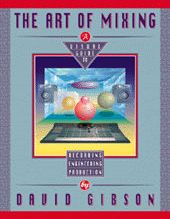
THE ART OF MIXING — A Visual Guide to Recording, Engineering and Production, by David Gibson uses visuals of mixes to explain and SHOW how to create every style of mix that is typically done for each style of music and song. Gibson has mapped out everything that can be done to create various effects in a mix. It’s an in-depth exploration into the aesthetics of what makes a great mix in a simple, visual manner. The book shows everything from Bluegrass to Big Band, New Age to Heavy Metal, Classical to Hip Hop, Jazz to Rap, and Alternative Rock to Techno.
Edited by George Petersen, editor Mix magazine.
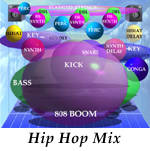 Chapter 1 – All Aspects of a Recorded Piece of Music
Every single component that goes into making a great recorded piece of music.
Chapter 2 – Visual Representations of “Imaging”
An introduction to the visual framework for displaying sounds in a mix.
Chapter 3 – Guides to a Great Mix
Reasons for creating one style of mix or another.
Chapter 4 – Functions of Studio Equipment and Visual Representations of All Parameters
Including: Fader, Compressor/Limiters, Noise Gates, Equalization, Panpots, Delays, Flangers, Choruses, Phase Shifters, Reverbs, Harmonizers, and Pitch Transposers.
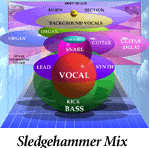 Chapter 5 – Musical Dynamics Created with Studio Equipment
Common values for the use of Volume, Panning, EQ and Effects in mixes for different styles of mixes.
Chapter 6 – Styles of Mixes
Creating different classic styles of mixes. Changing the style of mix in the middle of a song.
Chapter 7 – Magic in Music, Songs, and Equipment
Chapter 8 – 3D Sound Processors and Surround Sound Mixing
Chapter 9 – Mixing Procedures
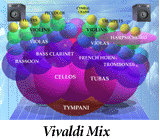 The visuals give you away to identify what other engineers are doing in the mixes you like. With this perspective on the underlying structure of the dynamics that are going on in a mix, you will develop your own values. Then, you can do whatever you want. Once you have a good perspective on what is possible, you have the power to be truly creative on your own.
Chapter 10 – Sound Healing and Psychoacoustics – Sound and Music and Mixes that Affect People Deeply
This chapter covers how sound and music can be healing. First Gibson’s discusses the four level of vibration called the “Hierarchy of Vibration.” These include frequencies and pitches, timbres (multiple frequencies of a sound), musical interval relationships, and musical flows. Health and higher consciousness can be explained using these 4 levels of vibration at each level of the body: physically, mentally, emotionally and spiritually. Ultimately, the “musical flow” level is the most important. Smooth flow without blockages is the definition of health at all levels.
The chapter then discusses when you feel each sound in a mix at the Chakra level, this can help you create a balanced arrangement of instruments across the whole frequency spectrum.
Then, this chapter explains how different geometrical structures of the spheres create different feelings appropriate for the music and mix.
Finally, we look at the various considerations between analog and digital recording.
Chapter 11 – Concert Pitch and Tuning SystemsTuning your music to auspicious frequencies such as 432 hertz has gotten a lot of press lately. This is called “concert pitch.” We discuss the advantages of tuning your music to a specific frequency and how to do it.
A “tuning system” is the frequency of each of the 12 notes in an octave (different than “concert pitch). The chapter explains the history and importance of these ancient tuning systems tuned to nature.
Chapter 12 – Brainwave Entrainment and Binaural Beats
This chapter explains how different rhythms entrain the brain into different brainwave states: Delta (sleep), Theta (creativity and Oneness), Alpha (Presence, Learning and Sports), Beta (thinking and overcoming ADHD), and Gamma (blissing out). David explains how to create binaural beat rhythms for brainwave entrainment tuned to the key and tempo of the song.
Chapter 13 – Tuning to an Intention and You
This chapter discussed the importance of holding an intention with 100% focus while recording and mixing your music. It also explains how to tune the song the rhythm of your breath while meditating on an intention. `Then, you will learn how to tune your music to your own Home Note of your metabolism where you are at peace.
Chapter 14 – Sound and Music for Healing Issues
This chapter covers how you might create music for specific mental and emotional issues such as Stress Reduction, Sleep, Pain, Anxiety, Depression, Fibromyalgia, Grief, Anger, ADD/ADHD, Trauma/PTSD, Addiction, Autism , Dementia, Parkinson’s, Schizophrenia, Traumatic Brain Injuries and Cancer.
Chapter 15 – The Future of Mixing
This chapter explains the future of mixing in Virtual Reality and using Artificial Intelligence to create your mixes. The potential is massive – especially for the realm of healing and higher states of awareness.
250 graphics of Mixes.
Published by Taylor and Francis
Showing all 2 results

Art of Mixing Book – 4th Edition
THE ART OF MIXING — A Visual Guide to Recording, Engineering and Production, by David Gibson uses visuals of mixes to explain and SHOW how to create every style of mix that is typically done for each style of music and song. Gibson has mapped out everything that can be done to create various effects in a mix. It’s an in-depth exploration into the aesthetics of what makes a great mix in a simple, visual manner. The book shows everything from Bluegrass to Big Band, New Age to Heavy Metal, Classical to Hip Hop, Jazz to Rap, and Alternative Rock to Techno.

Art of Producing Book – 2nd Edition
This book provides an all-inclusive perspective on everything that goes into producing a project, and how to do it. Most producers are simply flying by the seat of their pants. Once you have finished this book, you will have a better perspective on how to produce a project than most producers. With experience you can become a major producer.